Artists
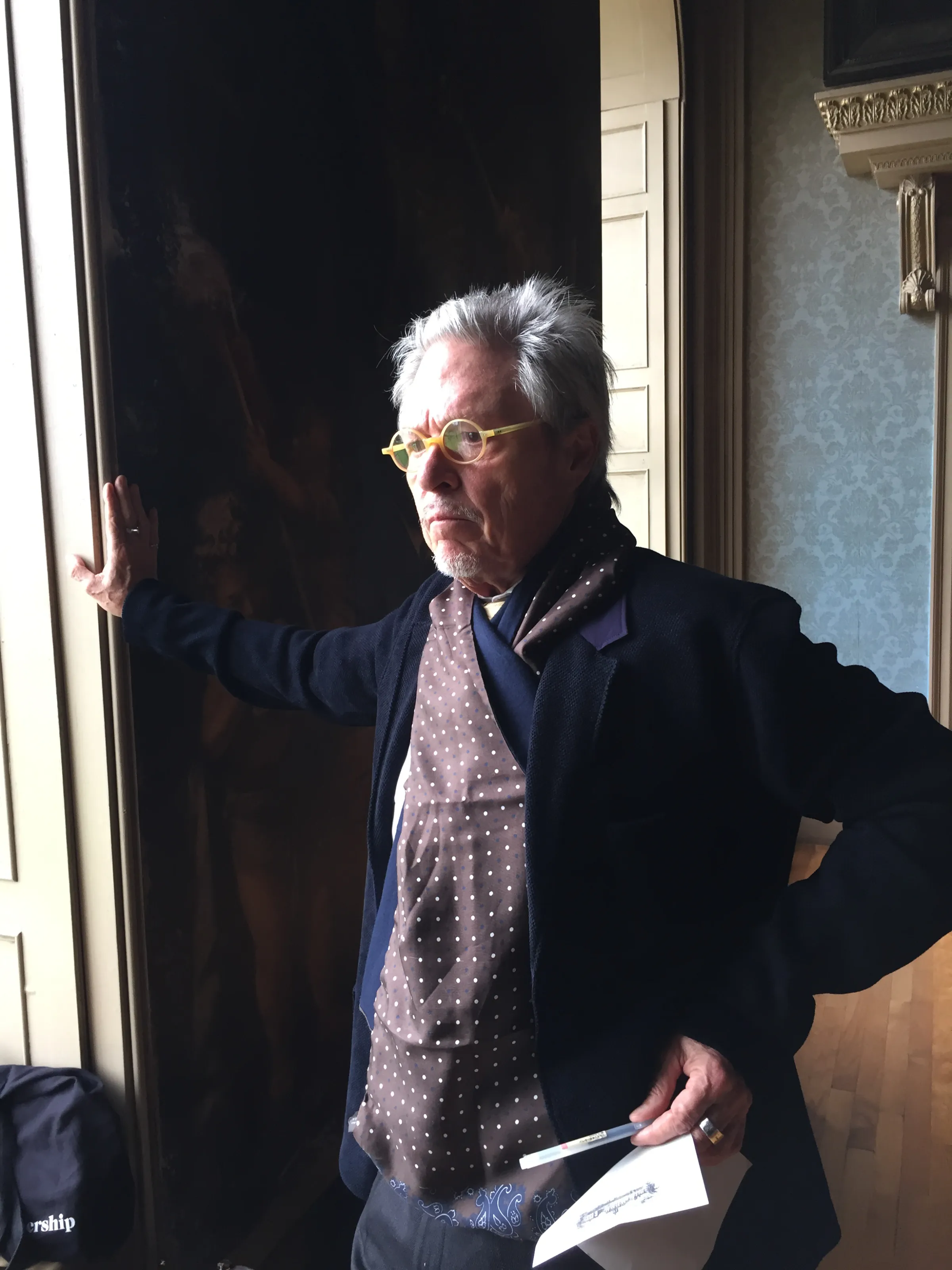
Michael Lindsay-Hogg
The Director Who Filmed the Beatles, the Stones, and a Life Lived at the Edge of Art
Michael Lindsay-Hogg needs little introduction. Without him, much of what has shaped our world may not have happened. This artist has had a fascinating career in show business as well as the arts. On stage, he directed Agnes of God on Broadway and Normal Heart at the Public Theatre in New York, and received a Best Director Tony nomination for Whose Life Is It Anyway?
At the age of twenty-four, in his own words: "Driven by ambition, cushioned by innocent optimism, having learned guile and been blessed with luck, I found myself directing the greatest ever live TV rock 'n' roll show, Ready Steady Go!, on which the regular bands were The Rolling Stones, The Who, The Kinks, Small Faces, with Dusty Springfield, Tom Jones, The Walker Brothers and the visiting Americans — The Supremes, Miracles, Four Tops, Everly Brothers, Roy Orbison, James Brown, Paul Simon. As a result of the attention the show received, I was asked to direct the earliest videos, then called promos. First with The Beatles, then The Rolling Stones. I did four with The Beatles and worked with The Rolling Stones for fifteen years."
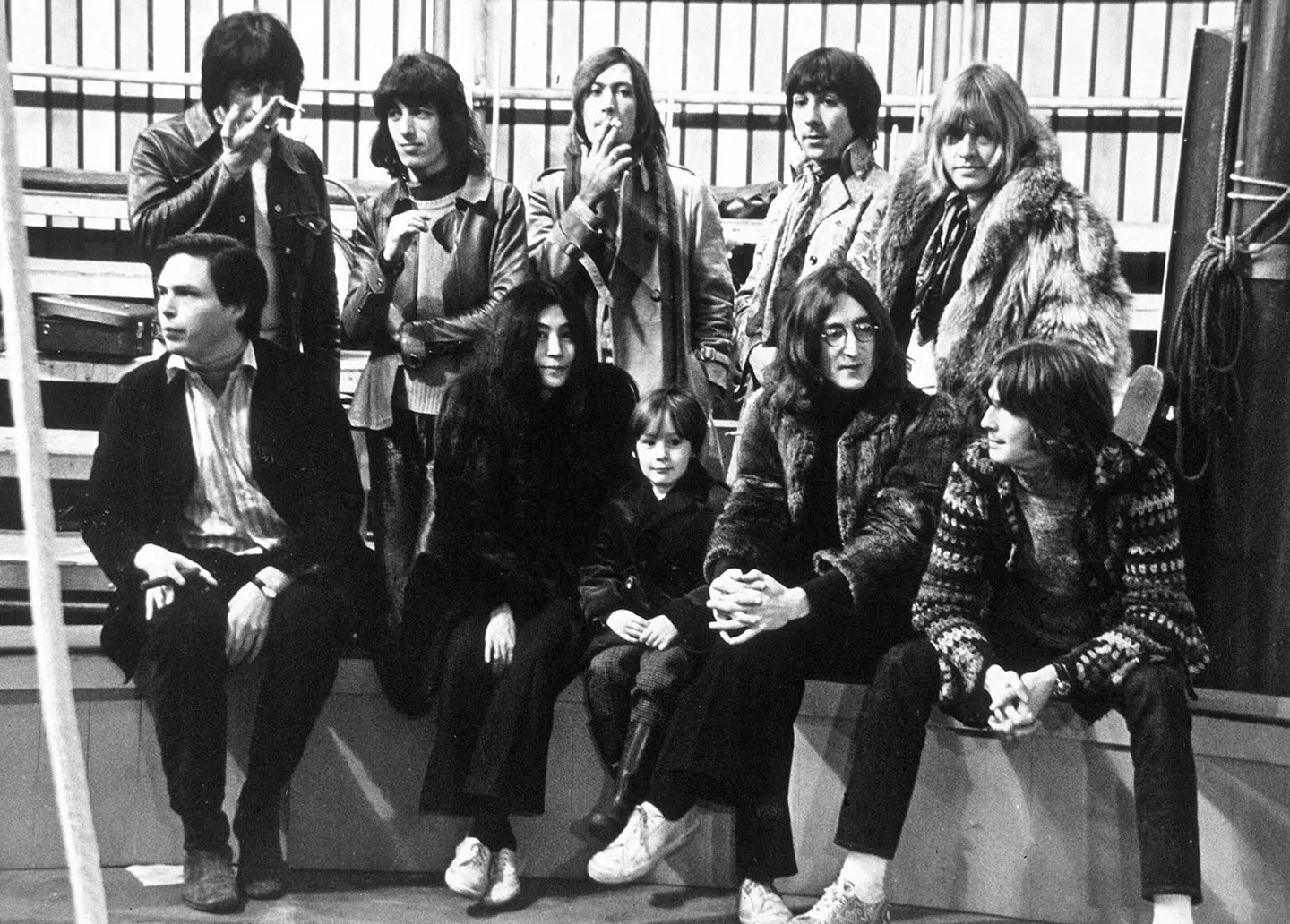
Lindsay-Hogg continued to direct groundbreaking videos with The Beatles, with hits like Revolution, Hey Jude, and the 1969 rooftop concert that became Let It Be. During those fifteen years with The Rolling Stones, he directed Paint It Black, Respectable, Waiting on a Friend, Jumping Jack Flash, It's Only Rock N' Roll, and the historically witty Rock N' Roll Circus.
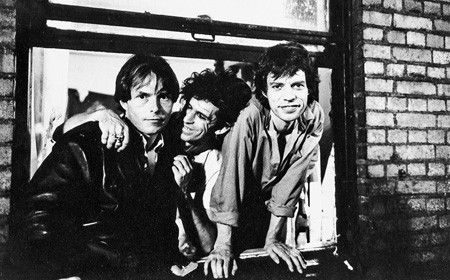
His direction in film and television has also been recognized by BAFTA: Best Director for Professional Foul, Dr. Fisher of Geneva, and co-direction of Brideshead Revisited. He wrote and directed The Object of Beauty with John Malkovich and Andie MacDowell, which won Best Picture and Best Director at the Cairo International Film Festival. Also Frankie Starlight with Anne Parillaud, Gabriel Byrne, and Matt Dillon, voted by Jeffrey Lyons and Siskel & Ebert to their Top 10 pictures of the year. His Waiting for Godot was part of the Beckett series, which won Best TV Drama on the South Bank Show. The list goes on and on.
After years of reflection, Lindsay-Hogg wrote a memoir about his childhood and early adult life, Luck and Circumstance: A Coming of Age in Hollywood, New York, and Points Beyond, with detailed descriptions of how, as a small boy, he was in the company of Marion Davies, William Randolph Hearst, playing hide-and-seek with Olivia de Havilland, serving drinks to Humphrey Bogart, and discussing the meaning of life with Henry Miller. His mother was the Irish actress Geraldine Fitzgerald, who received instant acclaim as Bette Davis's best friend in Dark Victory and starred in William Wyler's Wuthering Heights. She spent time with Hollywood's elite, Laurence Olivier, Charles Chaplin, and Orson Welles, with whom she worked at the Mercury Theatre.
Growing up among such great talents, how could Lindsay-Hogg not become a fountain of brilliance? His paintings and drawings have regularly been on display in London, Paris, New York, and Los Angeles. "In the last twenty years or so, maybe because of a sense of stability that my marriage has given me, and also I've got a place to do it, I've started with oils, and I still draw every day, and there are several thousand by now," he says. His paintings have been widely collected, and are in the private collections of Mr. and Mrs. Rodolphe Von Hofmannsthal, Mr. and Mrs. Julian Sands, Nona Summers, Tara Summers, Jean Marsh, Wes Anderson, Leslie Nasser, Marc Kristal, Jane Moseley, Wendy Goodman, Gloria Vanderbilt, and Mr. and Mrs. Richard Finkelstein.
Exploring the Creative Process
VC: Michael, I would like to talk to you about your creative process, painting over writing. I was intrigued by your comment during an interview with Shane Guffogg on his television program The Art of Art, where you said: "My subconscious mind — such that it is — is at work when I paint, because it's not that it isn't the same brain, but it sort of divides off. When I paint, I have a different level of fascination. When I write, I try to get down to the truth."
VC: I wondered if we could talk about this and you could explain your process of painting. Where do your first ideas come from? Do they come from memories of the past, or are they dreams of reaching into the future? Or are they thoughts and events that happen throughout a day, given an additional twist? You have produced some intriguing paintings that are intellectually rich, bathed in colors yet quite cerebral. There seems to be a narrative that keeps the viewer guessing. Shane Guffogg refers to your subjects as your cast of characters. I think you must see and feel the world quite passionately.
MLH: In an essay, Marcel Proust wrote: "All this bears out what I have told you, that any man who shares his skin with a man of genius has very little in common with the other inmate, yet it is he that is known by the genius's friends."
Leaving genius aside, I think I know what he meant. The working person, in their artistic endeavors, acting, directing, painting, writing, is one person when they are doing it, with their concentration, their imagination, their solitude. But yet somehow a different person in their quotidian pursuits: the checkout counter at the supermarket, or filling the car with gas.
Yet it is those daily exchanges when, though the mind may be idling, it is not asleep, and can often receive messages from Brain Central, just when you least expect them. The painting problem, that insoluble scene in a play, can suddenly be solved when you have not been thinking of it, or so it seemed. The brain of a person who seems to function on a creative level, successfully or not, is like a magnet ready to grab whatever and however something useful comes its way.
"The brain of a person who functions on a creative level is like a magnet — ready to grab whatever useful thing comes its way.
— Michael Lindsay-Hogg
For me, I knew I would have no career in the normal business world, not that I might not have liked it, but I had no aptitude for it. My concentration strays, and while it can be ferocious when it is engaged, at other times it wanders. And, thank goodness, I have more or less been able to make a living with it.
Sometimes I can write and paint on the same day. Drawing is not an issue. I draw every evening. But sometimes it is like having two girlfriends: one becomes more demanding and makes me shun the other for a short or longer while.
I have been trying to write a novel for twelve years and have just started on it again. And I have not only not felt like painting, but haven't even liked the idea of doing it. Have not liked paint or brushes or surfaces. Until yesterday, when after three months, I started again.
VC: This is fantastic to hear. I understand the creative process is dynamic and there is no easy formula, the act of creativity is a live wire and one must think and feel it all the time. In René Descartes's proposition Cogito, ergo sum (Latin philosophical proposition), which typically translates to "I think, therefore I am." The phrase originally appeared in French as je pense, donc je suis in his Discourse on the Method, which translates to "we cannot doubt of our existence while we doubt." Does the nature of Being, and what Descartes wrote, enter your work philosophy? And does identity play an important role in your creative endeavors, in what you want to voice or what you want to create or document?
MLH: As far as I understand your question, it is partly about how the rise of identity claimed by a person or a group might include me, and how it does or doesn't affect what I do. In a way I am sympathetic to all people and groups, so long as they don't want to kill me. But temperamentally, probably going back to school days, I am not a joiner.
And then what is strange is that over time, often a long time, a bit of the story remains, but what lasts or doesn't is what was done, and that too can be forgotten or ignored. Chairman Mao was responsible for the death of millions of his citizens, but has been dead forty years or more, and so in China and in America too, you might find little effigies of him standing at his desk, put on display or in the garden, as an ornament.
Degas was reputed to be an anti-Semite, but that philosophical filth does not affect the paintings, which are great. Always there will be conflicts to do with opinion and what lasts or doesn't. That's the way it is, although today with Social Media vigilantism, the screaming can drown out the considered nuanced opinion. Basically, when I do whatever it is I do, I am only affected by what's in my head, and not what's in anyone else's. My t-shirt will say: Sympathy for All. Solipsism for Me.
The Paintings
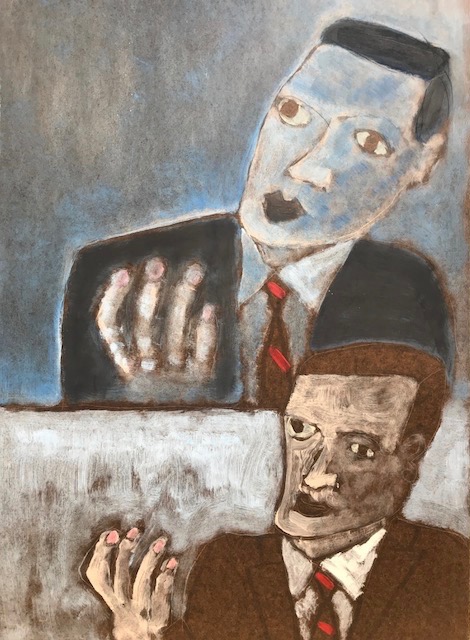
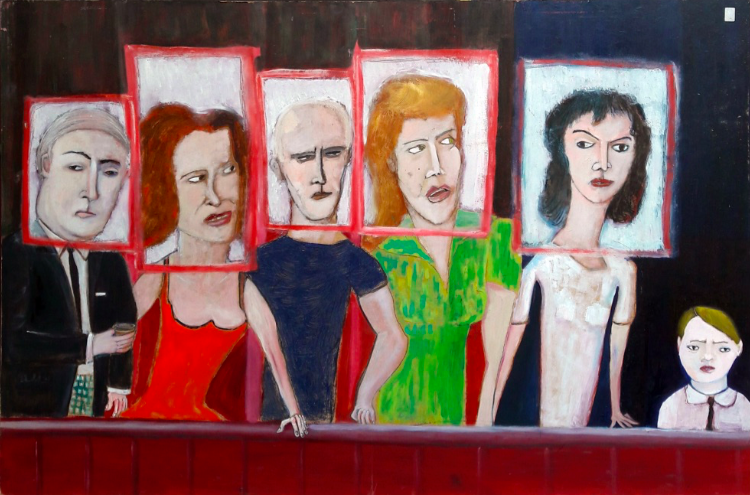
In the last twenty years, Lindsay-Hogg has committed to oil painting with the same intensity he once brought to the camera. He draws every day. There are several thousand drawings by now. His paintings are figurative, psychological, and deeply private in the way that only very public people can manage. Faces emerge from darkness. Figures are caught mid-gesture, mid-thought. There is something cinematic about the compositions, but also something film cannot achieve: stillness, duration, the invitation to look rather than watch.
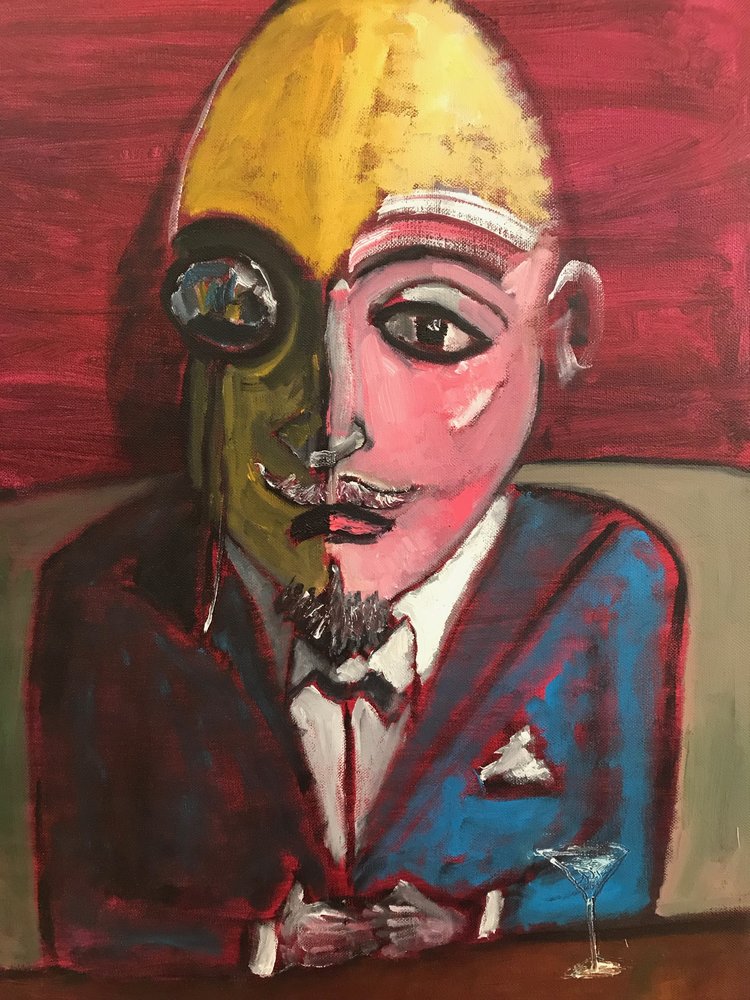
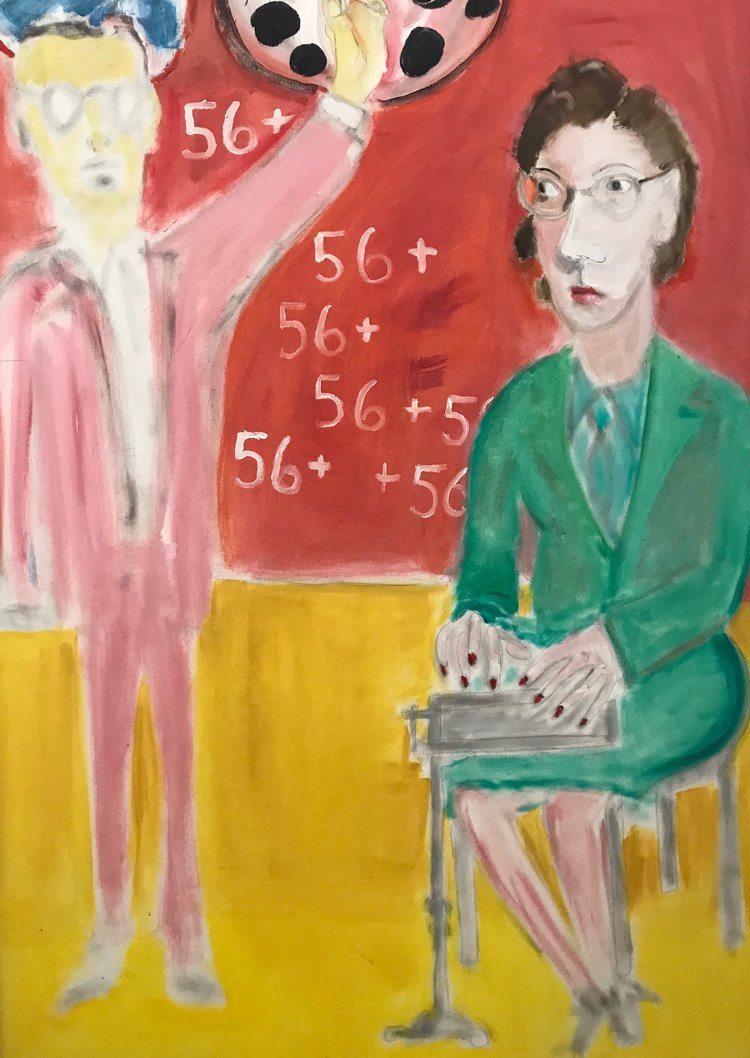
Growing up among such great talents, how could Lindsay-Hogg not become a fountain of brilliance? In painting, he has found the one discipline that the camera could not rival: the invitation to look rather than watch.
Career Milestones
— Michael Lindsay-HoggWhat the camera couldn't hold, the canvas could. I came to painting the way some people come to confession — with urgency, with a need to say something that the more public forms of my art had not allowed.
The Studio — Los Angeles
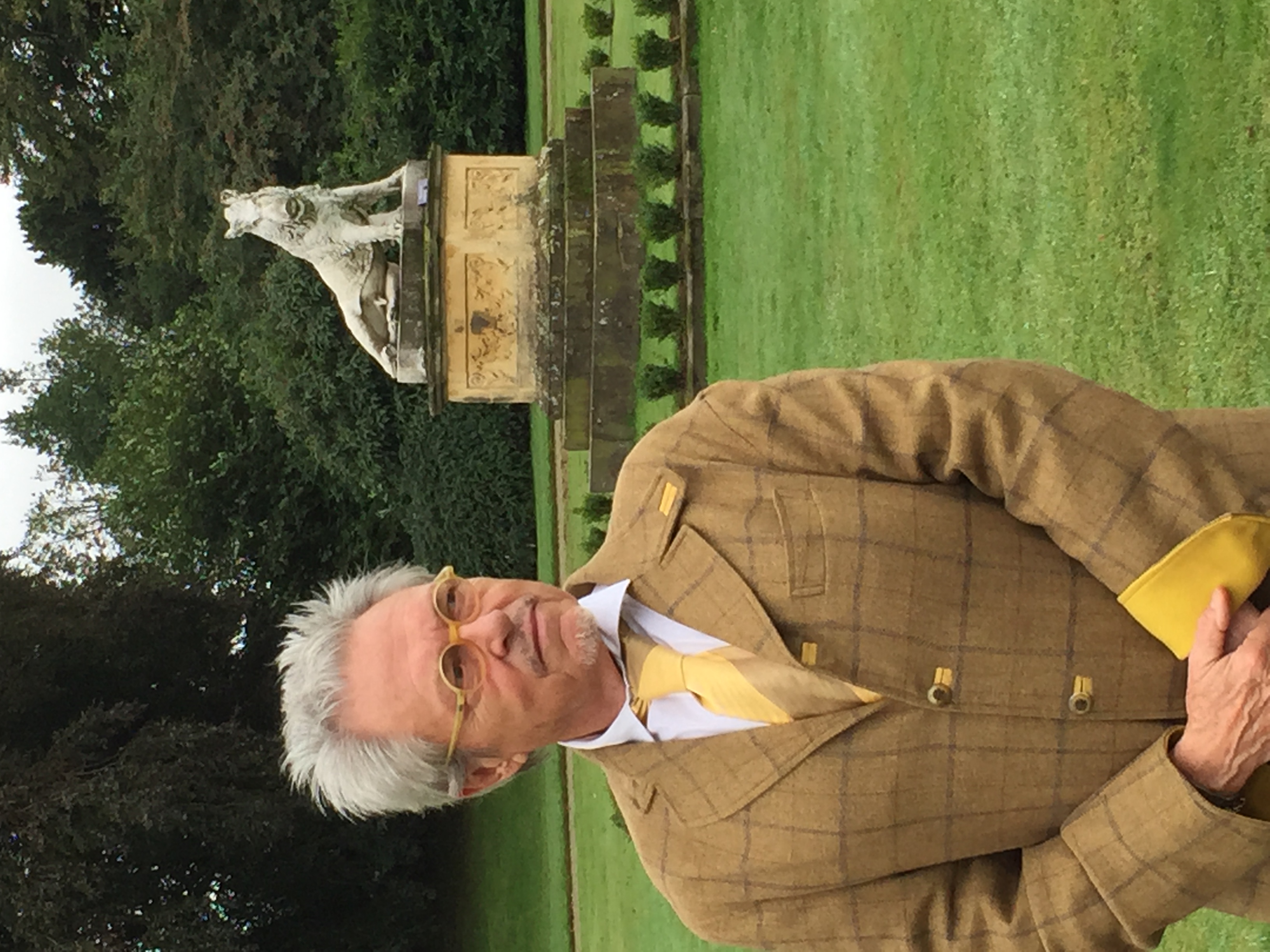
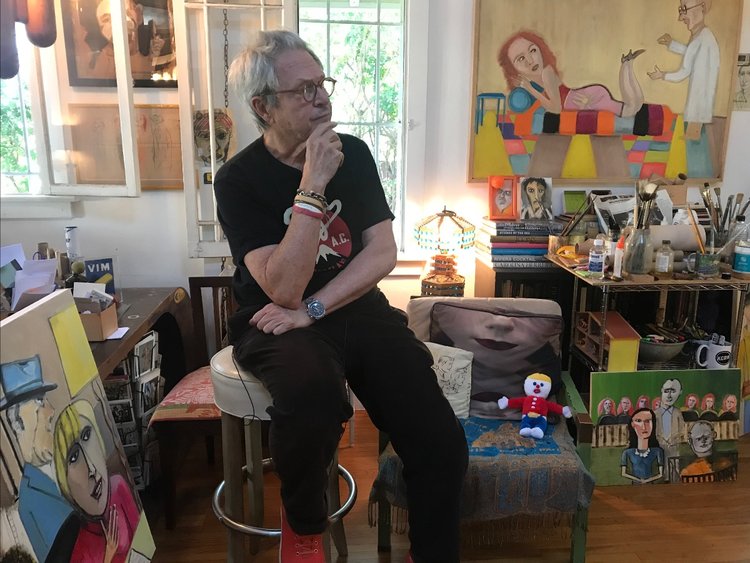
Lindsay-Hogg at work — Los Angeles — Photography: Art Confidential
In the last twenty years, perhaps because of the sense of stability his marriage has given him and because he finally has a dedicated place to work, Michael Lindsay-Hogg has committed to painting with the ferocity he once brought to the camera. The results are works that are simultaneously cinematic and deeply still.
His t-shirt says it best: Sympathy for All. Solipsism for Me.